Friday, December 17, 2010

NEKO

CATS

Just back from my morning walk around the neighbourhood through Heiwa Park (peace park) and the eucalyptus plantation (the eucalyptus are being grown for the koalas at the zoo). I am still trying to understand the significance of the humble cat to the Japanese. It can be difficult to have a pet in Japan, people live so closely together and most apartment blocks do not allow them. Dogs seem to be trained not to bark, even the smallest terrier. Most dogs are tiny, special breeding produces miniature dogs. In Japan there are miniature dachshunds, corgis, chihuahuas and tiny terriers of all varieties. Many dogs, some would describe as nothing more than a football. On my walk, I pass a grown man in his suit with three cats around his feet. One is a kitten. The kitten sits on his leather shoes. The man feeds the stray cats as if they were his own. He looks at me as I pass by. What is he thinking?  I guess I should say, "aren't they cute", "kawai desu ne". Does he come down here to this park to feed these cats everyday? As a Melbournian I can hear 774's Dr. Hugh say they should be destroyed, but this man, feeding these semi-tame, wild cats treats them as his own. He is feeding them commercial cat food and they are living here in the peace park. There are cats like these all over Japan. Another 300 metres along, a well dressed lady gets out of her brand new Toyota and produces bread crumbs for another group of cats, some with deformed stumpy tails. Six plump, wild cats scurry over for breakfast.
When we first arrived in Japan these cats seemed deplorable. They still seem deplorable, but now at the least we have an understanding that they provide a soothing comfort to many in Japan who come to feed them and treat them as their own. In Asian culture the cat is more than just a wild pet living in the park, but their true significance is still something that we do not understand. If you can help us to understand the significance of the cat, please post a message or send an email. Why are there cats waving their left hand, some their right? Why are there art exhibitions devoted to the cat? Why is there a street in Tokanome, a pottery district near Nagoya completely themed on cat art?


Sunday, December 5, 2010

FUJI APPLES

It is apple season now, the end of autumn. Japanese apples are so different to those we have in Australia. They are enormous, way too large for a bento box or western lunch box. One fuji apple can feed a whole family. These apples are so sweet and drip apple juice like a tap. We were kindly taken to this apple orchard, a secret location, somewhere near Iida just into Nagano prefecture. The children were instructed to climb to the top of the oldest trees to pick the sweetest apples. Some trunks were 50cm in diameter. We cannot help but compare these apples to the ones we know in Australia, how we would love to have a tree so plentiful and apples so large. Something tells us that these apples have been growing here for 100s of years, maybe even longer.

With the snowcapped mountains in the distance we are in awe of this country's beauty. The valleys are so packed to the brim with small buildings, people living in small apartments all over Japan. Rural Japan seems just like the cities. Yet to escape these crammed living situation just look up. On a clear day a beautiful rugged mountain is almost always in sight.


Wednesday, November 17, 2010

Tuesday, November 2, 2010

Tea Ceremony

Ocha, Green Tea.

Having seen where and how it is grown, Sophia and I now venture forth to learn how it is served. The tea ceremony is somewhat of a mystery to us. Such ritual we cannot fully understand, but at least we can see how it is done and observe.

Nervously, we enter into Sensei Kato's home to learn something of the fine art. We are seated on the tatami matting, generously welcomed as special visitors from abroad. How long can we sit on our legs before the numbing causes a lack of circulation and a squealing Australian cry resonates through the paper thin doors?  How do the Japanese sit like that for hours? We meet the other students and are introduced, we bow deeply to the floor and try to learn the art of bowing before we learn the art of the ocha ceremony. Bowing seems to be easy now, although my Japanese friend insists that my bow looks more like a bow reserved for meeting the Emperor or the next Samurai.
I look at our Sensei. Sensei Sato, a specialist in the art of tea ceremony. She is 88 years old. She sits on her legs for the entire three hours, she is described by Sensei Kato as lively. Well, she sure is doing better than me with that kneeling position. I bow deeply to her, my hands in front, on the ground. I bow my Emperor bow to her, it seems appropriate. Sensei Sato has been teaching the art of the tea ceremony for over 50 years. I give her the best and deepest bow that I know.
Before I pass out from lack of circulation to the limbs I am asked if I would like to sit in a seat. A welcome invitation, the Japanese seem to understand the difficulty we foreigners have with kneeling or was, "help my legs are killing me", written all over my forehead? Apart from Sophia I am the youngest person at the tea ceremony, yet, I have to sit on the seat. Oh dear!
Sophia and I sit and observe. One by one the Japanese students prepare and make the tea, mutter some words and bow again. Sensei Sato corrects their movements. The small urn needs to placed in the most particular way, the prettiest side of the ceramic pot pointing to the guests, everyone seems to have trouble with its' precise position. A little back, a little further around. And how to open the lid? The tea must be checked by the guest who is drinking it, turn it twice, open and smell. It is a brilliant bright green. Not iridescent, but green like a grove of cypress pine.
It is my turn now, back onto my knees I kneel.


Now that I am in the special serving position, I should be feeling terribly nervous. The other guests have giggled with embarrassment at their mistakes and now it is my turn. Knowing that every move and touch of the cup and plate will be incorrect I should be worrying myself into a deep sweat alike to the summer heat just passed. But these wise women and one man put me at ease. It doesn't matter how badly I receive my sweet or slurp my tea. In fact I am instructed to make loud gulping noises, oo and ahhs to describe how delicious it all is. I must subtly vocalise my delight in this whole process. Firstly I am handed a sweet that represents the season, currently autumn. Japanese people are happy when the autumn persimmon arrive, it is almost as favourable as the cherry blossom in the spring. It is true, now, there are persimmons on ever corner. Round orange fruit hanging from trees all over Japan. Does anyone have a recipe for persimmons?

My first test. I am handed the sweet to eat first. Somehow I am supposed to cut this Japanese sweet with a little piece of wood, not much bigger than a toothpick. Ah, it is stuck, mm, what to do? All eyes are on me now, they look to see how I enjoy it. I decide to chuck the whole thing in and chew. It wasn't very lady like really, certainly not Japanese at all. I am left with a smudge of stuck-on bean sweet on the paper. Maybe I should just stuff that in my pocket to hide the remnant mess.But am saved by Sensei Kato who quickly eradicates the foreigners evidence from the room. It is then time to try the green tea. It is thick, cypress grove green  and looks chunky! Gosh, again everyone watches to see if I like it. Sensei Sato corrects me as I hold the bowl of tea with the wrong hand, I drink it as quickly as I can. Luckily it is not as bitter as I had feared. I have passed the initial test of Tea Ceremony. It is a true art that is studied for years and years. The most promising student is a lady who has a lesson each week and has done so for three years. She folds the drinking cloth with finesse, rotates the bowl and places every vessel perfectly. It is mesmerizing to watch her, she is so fluent and at ease in this surprisingly exquisite art form of the Tea Ceremony.

Thursday, October 14, 2010

Baseball

Before I talk about sport, I can now report that summer has ended. Such relief. It was the hottest, longest summer ever recorded in Japan. The temperature gauge read 35C-38C everyday, but it is difficult to understand the effects of the humidity without experiencing it first hand. The local weather report gave a sweat index, often translated as,"you will squirt today". This literally means that you will have beads of water jumping off your head and a mini creek running down your face. The Japanese carry a small towel, some wear nappy like bandannas and  the women walk with parasols to help reduce the temperature. The surprise for us was that the temperature didn't drop much at night, certainly not enough to stop sweating. Four and a half months of sweat-ugh! But now, the weather is perfect, it is 25C and no wind. As of October 1st all school students across Japan changed to their winter uniform, the temperature is irrelevant. The swimming pools have closed and the office workers have packed away their short sleeve shirts for another year. It is a great time to travel to Japan.
Sport

No one in Japan knows anything about AFL, neither the expats nor the Japanese have ever heard of the game and have no desire to know more.  "Is it like rugby?", they ask. Cricket seems to get a better response, at least the Japanese have heard of it and many of the expats play it in their home country; the Caribbean, England, India, Pakistan. We did have a bit of luck in the park one day with our cricket, providing curious
entertainment  for the locals and with some brave Japanese boys joining in. But when in Rome, one must do as the Romans do and that is definitely Baseball with a capital B. It is huge here in Japan, bigger than sumo wrestling and soccer. Worried that he might lose his cricket swing or bowling technique, you know who had to be dragged along by his peers to sign up for the team. Changing the swing to horizontal took some practice, bowling from a mini mountain seemed impossible and trying to catch the ball with that ridiculous over sized glove was stupid. However it is now apparent that cricket is a great training ground for baseball. When he lined up in the B team to bat against Osaka International School he drove the ball through the covers and with the whole of Nagoya International School cheering made the only home run for the day, his first hit in competitive baseball.
Now he is in the A team, placed in the outfield, he throws twice as far as those with a background in baseball. Playing cricket is a great way to prepare for baseball. He has been described as a natural athlete by his coach. Thankyou NIS.

Sunday, September 12, 2010

Itadorigawa

SURPRISING JAPAN


With help from local friends we found ourselves at Itadorigawa. It is a beautiful clean and clear river in Gifu prefecture, only 70 minutes drive from home. The deep, green water is reminiscent of Far North Queensland in Australia. It is a perfect temperature, a natural paradise and no need to worry about crocodiles :)


 .....and a great place to dive!

Tuesday, August 31, 2010

Mount Fuji

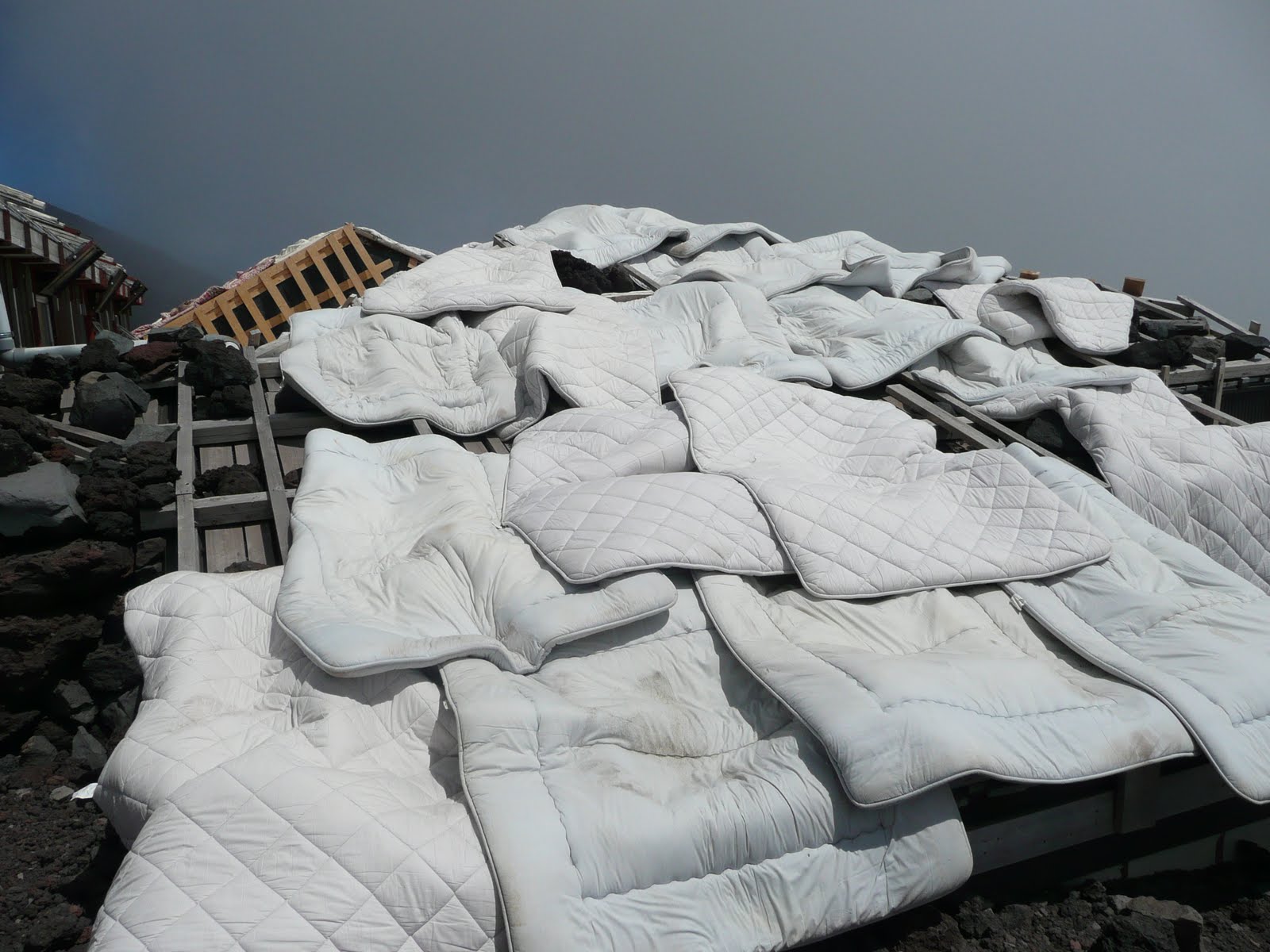
White lights like fire flies weave through the air to the eighth station, systematically following each other, slowly and steadily they come. It is 2am on Saturday 28th August, the last weekend of the climbing season at Mount Fuji. I am awake to greet them at Hachi-Gome on the Fujinomiya route, Mount Fuji. This is Station 8, 3250 metres and only 500 metres from the summit. We have decided to bed down in one of the mountain huts and divide our ascent into two days. We try to sleep for a few hours with about 100 others, it is amazingly quiet considering we are practically touching toes and can feel the vibrations of people breathing. I wonder how many others have slept in this futon, how is cleaned?  But for now, I am so excited about the sunrise to come, I soon forget about our lodging and am grateful for this experience. Fuji-san, as it is affectionately known is as magnificent as expected. Our first sight of the revered mountain takes our breath away. It is strikingly beautiful. It's height shocks us ......................."Fuji-san!" we exclaim, like a five year old child seeing the mountain for the first time.

By 2am, most of our "hut-mates" head out for the final climb to the summit. With lamps on their heads and warm clothes they depart. But we are content to view the sunrise from station 8. At 4.50 am we are awoken, "wake-up, the sun is rising".
Oh My Gosh! Stunning!


Fuji-san is everything and more, it is better than everyone said, we are humbled by our insignificance on this magnificent planet. Fuji-san is a "Top 100 must see destination".

By 6am we start our ascent to the top. The next stage to the 9th takes us twice as long as expected, the air is thinning, we are climbing not hiking. With all fours in spots, we pull ourselves over the 300 year old lava deposits, careful not to dislodge too many large rocks. They are light, easily moved, a peril for those below us. We meet the Japanese army in training, one by one they amicably call, "ohayo gozaimus". The camaraderie on the trail warms our spirits, we are all in this together, no matter what country we come from or what language we speak.

It came as a struggle for the family of four, but by 10am we arrived at the top of Mount Fuji san, 3770 metres. Surprising how many people were sleeping out in the open, were they the ones we saw at 2am at Hachi-Gome?

The descent was so much faster, but not without incident. I now have blackened toe-nails from the pounding on the slippery lava trail.


Both Mark and Oliver were sick and Sophia suffered a little sunburn being so exposed to the elements. Now three days later, our legs are recovering from the climb. We now have full understanding of the Japanese proverb: "A wise man climbs Fuji once. A fool climbs it twice"
What an unforgettable experience! Is this the highlight of our year in Japan?